
"Latin America coffee trade"
500 article(s) found

A brief introduction to the flavor, taste and aroma characteristics of Nicaraguan boutique coffee beans with mild taste
Planted with volcanic ash and shaded trees, it produces high-quality Nicaraguan coffee with a mediocre, soft and slightly sour flavor. Nicaraguan coffee is the largest of all coffee beans, while MADRIZ (Madriz) is located in the mountains of northern Nicaragua, adjacent to NuevaSegovia,Jinotega and Esteli, a quiet and elegant region known as the Somoto Gorge

A brief introduction to the market price of Nicaraguan boutique coffee beans with mild taste
Coffee is Nicaragua's main export. According to the president of the Nicaraguan Coffee Farmers' Federation, due to the poor harvest of coffee in Nicaragua's Pacific region, the country's total coffee production in 1998 may be 12% lower than that in 1997. In the coffee year of 1997 and 1998, Nicaragua harvested 1.422 million bags of coffee (each bag of 46kg), which has been producing 1% of coffee in the past 14 years.

The trade pattern of raw coffee beans is changing, with both challenges and opportunities.
The translator said that when we are still arguing about which coffee shop has better coffee, when we are still despising each other for whose flower drawing technology is better, while we are still boasting about baking technology, don't forget who created the coffee. Maybe at the moment you are still worrying about what to eat for lunch, but you know, there are still some people in the world, he

A brief introduction to the description of the flavor, taste and aroma characteristics of Nicaraguan boutique coffee beans
In many countries, coffee production will be seriously affected for political reasons. Nicaraguan coffee industry is no exception. The 1979 revolution forced coffee planters to flee to Miami. A period of indecision followed, when the government considered whether to redistribute land (including many plantations), which led to a shortage of coffee and a decline in production since the early 1970s
Volcafe sets up a Chinese joint venture to participate in Yunnan coffee bean trade
Volcafe, a coffee business owned by commodities trader EDF Man Holdings, announced on Tuesday that it had signed an agreement with China Simao Arabica Star Coffee Co., Ltd. to set up a joint venture to buy and sell coffee beans grown in southern Yunnan Province, hoping to help meet global coffee demand. Although China is in the global coffee market

A brief introduction to the planting market price of Nicaraguan boutique coffee beans with moderate acidity
Coffee is Nicaragua's main export. According to the president of the Nicaraguan Coffee Farmers' Federation, due to the poor harvest of coffee in Nicaragua's Pacific region, the country's total coffee production in 1998 may be 12% lower than that in 1997. In the coffee year of 1997 and 1998, Nicaragua harvested 1.422 million bags of coffee (each bag of 46kg), which has been producing 1% of coffee in the past 14 years.

How does Bolivian coffee compare with Latin American countries?
Following Cafe Review (Wechat official account vdailycom) found that Beautiful Cafe opened a small shop of its own. How does Bolivian coffee compare to Latin American countries? This problem is not only related to the soil, planting height, bean seeds and the technology of farmers, but also has a decisive impact on the importance of national exports and the support of the local government. Coffee, in Bolivie.

How many tons of Pu 'er coffee can you drink together? Pu' er coffee beans mature time
Professional coffee knowledge exchange More coffee bean information Please pay attention to coffee workshop (Weixin Official Accounts cafe_style) Beautiful China Yangtze River Xingyun South Station media interview group visited Yunnan International Coffee Trading Center Yunnan International Coffee Contact Center is the main coffee producing area in Yunnan, Southeast Asia, South Asia and Asia, facing the vast coffee consumption in the mainland of China, Hong Kong, Macao and Taiwan, Asia and Europe and America.

Flavor characteristics, producing areas and cooking parameters of single bean in Santa Rita Manor, Colombia
For the exchange of professional baristas, please pay attention to the coffee workshop (Wechat official account cafe_style) Columbia Santa Rita Manor single bean flavor characteristics, producing areas and brewing parameters main varieties: 11% Typica 75% Caturraphia 14% Castillo by a special combination of various factors, latitude, altitude, soil, plant origin and production of species in the coffee growing area of Colombia.

A brief introduction to the origin, development, history and culture of Nicaraguan boutique coffee beans with mellow taste
Coffee is Nicaragua's main export. According to the president of the Nicaraguan Coffee Farmers' Federation, due to the poor harvest of coffee in Nicaragua's Pacific region, the country's total coffee production in 1998 may be 12% lower than that in 1997. In the coffee year of 1997 and 1998, Nicaragua harvested 1.422 million bags of coffee (each bag of 46kg), which has been producing 1% of coffee in the past 14 years.

Single bean grading, price, raw bean and baking curve of Santa Rita Manor, Colombia
The exchange of professional baristas please follow the coffee workshop (Wechat official account cafe_style) Columbia Santa Rita Manor single bean classification, price, raw beans and baking curve NARINO some of Colombia's highest quality coffee is grown in Nari ñ o, some of the most amazing and complex flavor. Growing coffee in many areas of these high-altitude areas is a challenge, and coffee trees can.

Brief introduction of planting situation, geographical location, climate and altitude of Nicaraguan boutique coffee beans with mild taste
When tasting Nicaraguan coffee, it is best to drink cold water first, so that you can better feel its mellow taste. Drink coffee while it is hot, because the tannins in Nicaraguan coffee are easy to change during cooling, and the taste becomes sour, which will affect the flavor of the coffee. You can add the right amount of sugar, and then add cream. Enjoy a cup of high quality Niga

The History, Culture and Story allusions of San Rita Manor in Colombia
Professional baristas exchange please follow the coffee workshop (Wechat official account cafe_style) Columbia Santa Rita Manor Saint boutique beans history and culture, stories allusions Colombian coffee varieties are mainly small grains of coffee. Plants are small trees or large shrubs, 5-8 m tall, usually much branched at base; old branches gray-white, nodes dilated, young branches glabrous, compressed. Leaves thinly leathery, ovate

A brief introduction to the planting Market Price of boutique Coffee Bean varieties in Joy Manor, Nicaragua
Nicaragua is one of the major coffee-producing countries, producing high-quality coffee. Even coffee from the Antigua Mountains of Guatemala, which is famous in Asia, imports raw beans from Nicaragua. Although Nicaraguan coffee is not famous in Asia, Nicaragua coffee is already famous all over the world (Starbucks has many cooperative coffee farmers in Nepal), while several coffee-producing countries in Central America

Brief introduction to the treatment method of grinding degree and baking degree of Nicaraguan boutique coffee beans with moderate acidity
Coffee is Nicaragua's main export. According to the president of the Nicaraguan Coffee Farmers' Federation, due to the poor harvest of coffee in Nicaragua's Pacific region, the country's total coffee production in 1998 may be 12% lower than that in 1997. In the coffee year of 1997 and 1998, Nicaragua harvested 1.422 million bags of coffee (each bag of 46kg), which has been producing 1% of coffee in the past 14 years.

Fragrant flavor of Nicaraguan Coffee Manor flavor and taste characteristics of Joy Manor
Managua, the capital of Nicaragua, is located in the west of the border, on the south bank of Lake Managua, hence its name. The northwest is 140 kilometers away from the Collinto seaport on the Pacific coast. 55 meters above sea level. It is a Spanish city with beautiful scenery. Because it is located to the east of the Pacific volcanic active seismic belt, there have been four strong earthquakes in the city in the past 100 years, including one in December 1972.

The sixth History of European Culture on the Coffee Table Colonial Coffee Garden, a microcosm of cosmopolitanism
After 350 years of drinking a cup of coffee-colonial coffee gardens, a microcosm of cosmopolitanism, the coffee tasted by Europeans after the 17th century is no longer Arabian coffee beans from the East. When cafes quickly became popular in Europe, adventurous businessmen targeted the coffee trade, figuring out the huge profits behind growing and buying and selling coffee. The overseas of the old colonial empire of the Netherlands

The trade pattern of raw coffee beans is changing, with both challenges and opportunities.
Coffee is our beloved, and global coffee consumption has nearly doubled in the past 40 years, with an average of 2.25 billion cups of coffee consumed every day, of which about 400 million cups are consumed in the United States alone. But do you know where coffee comes from, how it is made, and how it becomes a delicacy in our cups? In order to change the mass consumer
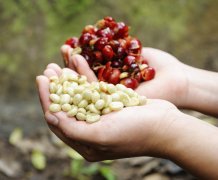
The trade pattern of raw coffee beans is changing, with both challenges and opportunities.
Coffee is our beloved, and global coffee consumption has nearly doubled in the past 40 years, with an average of 2.25 billion cups of coffee consumed every day, of which about 400 million cups are consumed in the United States alone. But do you know where coffee comes from, how it is made, and how it becomes a delicacy in our cups? In order to change the mass consumer
Coffee beans rising prices Brazil coffee beans rising prices coffee growing in coffee areas
Photo: Brazil is the world's largest coffee producer, with 17 of the 21 states producing coffee. Brazilian coffee workers are collecting coffee beans on February 16 (Reporter Zheng Yunyang) since it was introduced into Europe via Italy, the smell of coffee has spread to every corner of the world. Production in Brazil, the world's largest coffee producer, has declined in recent years, with coffee prices rising 50% year on year in 2014.